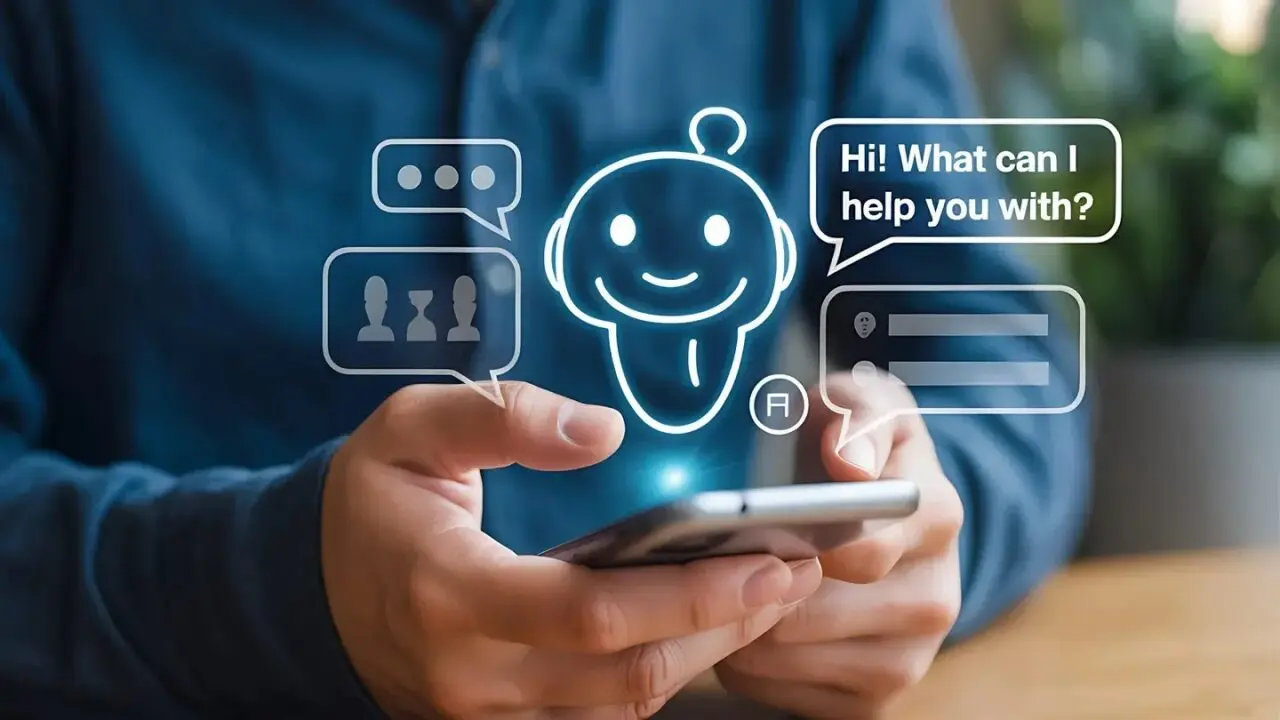
The year 2026 will be remembered as the tipping point in mobile history. For decades, we measured the progress of handheld devices by the clarity of their screens or the megapixels in their cameras. However, the conversation has fundamentally shifted. Today, the smartphone market is no longer driven by hardware specifications alone; it is driven by intelligence. We are living in the age of the AI Smartphone, a device that doesn’t just respond to our commands but anticipates our needs.
The Paradigm Shift: From Apps to Agents
In the early 2020s, our interaction with technology was “app-centric.” If you wanted to book a flight, you opened a travel app. If you wanted to edit a photo, you opened a dedicated editor. In 2026, this fragmented experience is being replaced by Agentic AI. The Future of AI Smartphones in 2026: Amazing New Features!
Modern smartphones now feature integrated AI agents that live at the operating system level. These agents have the permission to work across different applications. Imagine telling your phone, “Plan a weekend trip to Cox’s Bazar within my budget,” and the phone automatically checks your calendar, looks up flights, finds hotels, and presents a complete itinerary. This level of automation is what defines the 2026 smartphone market.
Hardware Reconstruction: The Rise of the NPU
To support these advanced AI features, the internal architecture of smartphones has undergone a massive overhaul. In previous years, the CPU (Central Processing Unit) and GPU (Graphics Processing Unit) were the stars of the show. Today, the NPU (Neural Processing Unit) is the most critical component.
Manufacturers like Qualcomm, Apple, and MediaTek are now dedicating more silicon space to AI processing than ever before. This hardware shift allows for “On-Device AI.” In 2026, privacy is a premium commodity. By processing data locally on the NPU, smartphones can offer real-time translation, voice synthesis, and image generation without ever uploading your personal data to the cloud.
Impact on the Global Economy and Manufacturing
The shift toward AI-heavy devices has also changed the global manufacturing landscape. With the complexity of NPU chips, we are seeing a consolidation of the supply chain. However, this has also led to a fascinating trend: the democratization of high-end features.
While flagship devices still lead the way, the “trickle-down” effect has never been faster. Competitive pressure has forced brands to include sophisticated AI capabilities even in their mid-range and entry-level models. If you are exploring the current market for a new device, you might be surprised at how much power you can get for a lower price. For a detailed breakdown of value-for-money devices, you should check out the 5 best budget smartphones to buy in 2026 to see how the gap between budget and flagship is narrowing.
Generative AI and the Creative Explosion
One of the most visible impacts of the 2026 smartphone evolution is in the field of content creation. We have moved beyond simple filters. Generative AI allows users to perform professional-grade tasks with a single tap.
- Generative Video Filling
In 2026, if you record a video in portrait mode but need it in landscape, AI can “fill in” the sides of the frame by generating matching scenery. This has revolutionized social media content, making professional cinematography accessible to everyone.
- Live Multimodal Translation
Language is no longer a barrier. During a live video call, the phone can translate speech in real-time, matching the speaker’s original voice and tone. This has opened up global business opportunities for small-scale entrepreneurs who can now communicate with clients anywhere in the world.
- Predictive Personalization
The AI in 2026 learns your habits at a deep level. It knows that at 8:00 AM, you usually need your commute map and a specific playlist. It prepares these in the background, optimizing the battery and processor for exactly what you need, exactly when you need it.
The Sustainability Factor
Interestingly, AI is also helping smartphones become “greener.” In 2026, AI-driven power management systems have extended the physical lifespan of batteries by 40%. By precisely controlling the charging cycles and power distribution, devices are lasting longer, which reduces electronic waste. Furthermore, AI is now used in the recycling process to identify and sort precious metals inside old smartphones with 99% accuracy.
Ethical Challenges and the Digital Divide
However, the 2026 market isn’t without its challenges. The rise of sophisticated AI has brought “Deepfakes” to the palm of our hands. Ethical manufacturing and AI safety have become major political issues. There is also the concern of the “Digital Divide”—ensuring that people in developing nations have access to these life-changing AI tools, not just those in wealthy urban centers.
Conclusion
As we look toward the end of 2026 and into 2027, the smartphone will continue to disappear into the background of our lives. It will become less of a “gadget” and more of a “companion.” The intelligence we carry in our pockets today was considered science fiction just a few years ago.
For users, the message is clear: the hardware is important, but the intelligence behind it is what truly matters. Whether you are a professional looking for productivity or a student looking for a budget-friendly way to enter the AI era, there has never been a better time to be a part of this digital revolution.